Prepare your home for market
Create a cleaner, calmer, easier-to-understand home without over-improving.
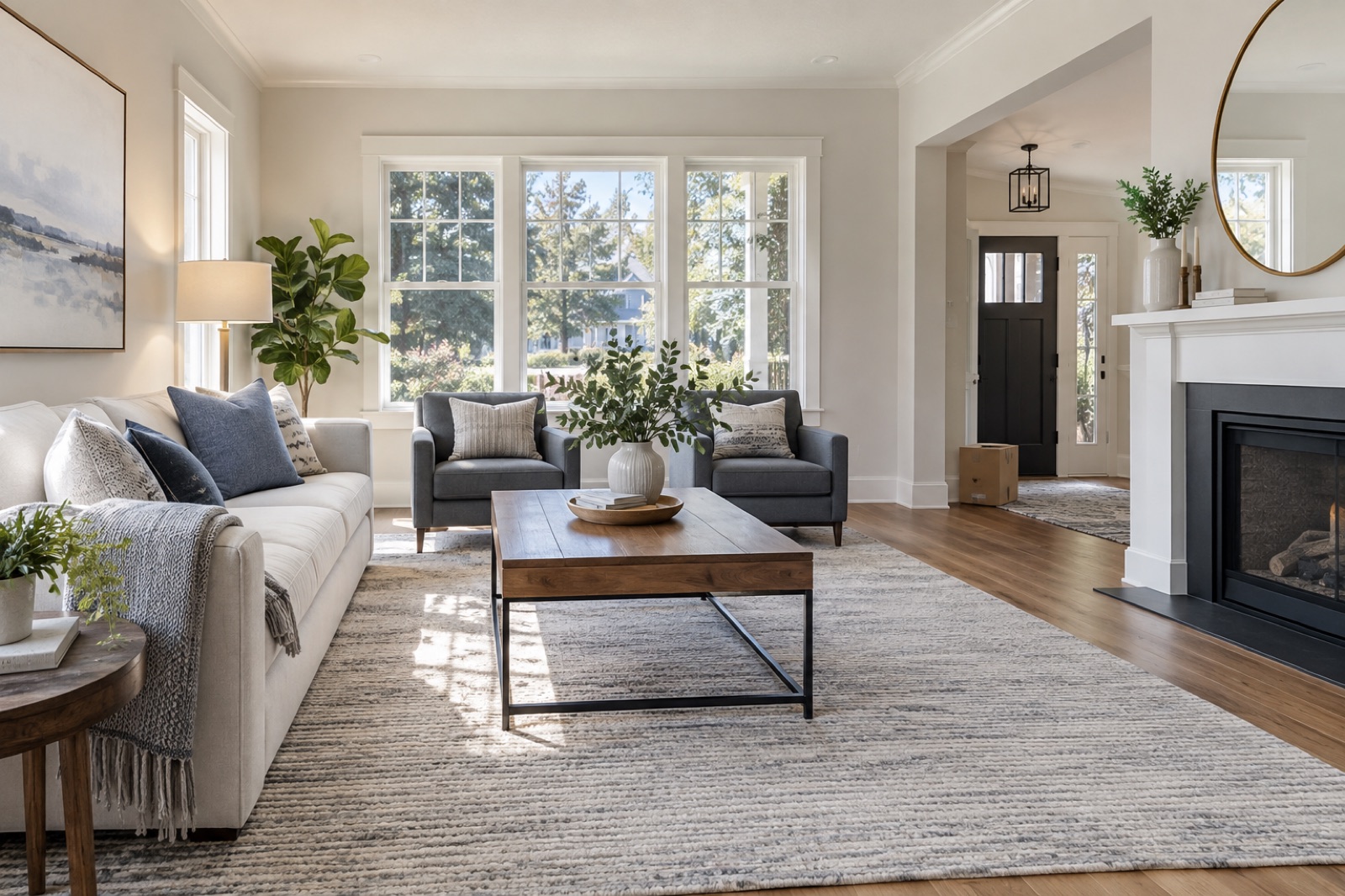
Preparation should reduce uncertainty and help buyers understand the home quickly. The best plan is rarely a full renovation. It is a prioritized sequence of maintenance, editing, cleaning, light styling, documentation, and access that makes the property easy to evaluate.
Fix obvious function and safety issues first.
Remove enough belongings to reveal storage and circulation.
Use consistent lighting, paint, and cleaning to create visual calm.
Collect permits, warranties, invoices, and service records before questions arrive.
A PRACTICAL PLAN
Work the decision in order
- 01
Walk the home as a buyer would, from curb to attic, and photograph every friction point.
- 02
Sort work into safety, water, function, appearance, and optional upgrade.
- 03
Complete messy work before deep cleaning, staging, photography, and launch.
- 04
Create a property file with improvements, ages of systems, utilities, and known issues.
01 / FIELD GUIDE
Make the house easy to read
Buyers form a quick mental model of condition. Burned-out bulbs, stuck doors, loose hardware, odors, and clutter can make them assume larger problems exist. Small repairs matter because they reduce the number of questions a buyer has to carry through the showing.
Edit furniture to improve sight lines and movement. Clear counters and reduce closet volume enough to show capacity. Depersonalizing is not erasing the home; it is making space for a buyer to imagine daily life.
02 / FIELD GUIDE
Stage for function, not theater
Every room should have an obvious use. A small bedroom can be a bedroom or office, but not a storage room with a mystery desk. Use scale-appropriate furniture, simple textiles, and a restrained color story.
Do not conceal defects. Staging should clarify space and support photography, not distract from water stains, damaged flooring, or required disclosures.
03 / FIELD GUIDE
Build the launch sequence
Photography should happen after final cleaning, landscaping, touch-up work, window cleaning, and staging. Create a shot list that covers the property honestly and includes features buyers would otherwise miss.
Coordinate listing copy, floor plan, showing instructions, disclosures, and offer process before publication. A polished listing with missing documents still creates friction.
04 / FIELD GUIDE
Control the cost
Set a preparation budget from expected net proceeds and the likely buyer response. Spend first on work that protects financing, insurability, safety, and broad appeal. Get written estimates for larger projects and compare the expected benefit with selling as-is.
Keep a contingency. Preparation often reveals secondary work, and the best plan preserves enough cash for moving, overlap, and post-closing obligations.
DECISION NOTEBOOK
Keep the evidence, assumptions, and next action together
Create one working file for prepare your home for market. Record the date, source, property or loan assumptions, the person responsible for confirming each fact, and the deadline attached to it. A number without its assumptions is difficult to compare later, especially when rates, insurance, taxes, credits, property condition, or contract terms change.
Save the supporting document or authoritative link, not only a screenshot or verbal summary.
Run a reasonable base case and a less favorable case. Make the decision work across a range.
Write the trigger, owner, and date for the next action so the plan does not drift.
When a professional gives an answer, ask what could make it change. That question exposes missing documents, property-specific limits, jurisdiction differences, and timing assumptions. It also creates a better handoff among lender, inspector, agent, attorney, tax professional, insurer, and settlement team when several disciplines touch the same decision.
VISUAL MODEL
Put the moving parts on one page
| Priority | Examples | Why it comes first |
|---|---|---|
| Safety and water | Leaks, unsafe wiring, trip hazards | Can affect inspection, insurance, and trust |
| Function | Doors, appliances, HVAC service | Reduces daily-use objections |
| Presentation | Cleaning, light, furniture editing | Improves photos and comprehension |
WATCH FOR
Avoid making expensive design choices for a buyer you have not met. Broad, neutral preparation usually creates less risk than a taste-specific remodel.
PRIMARY SOURCES
Sources and further reading
- National Association of Realtors, 2025 Profile of Home Buyers and Sellers ↗
- EPA, lead-based paint disclosure rule ↗
Facts and links last checked September 19, 2026. Statistics describe the cited publication period and are not forecasts.
NEXT CHAPTER
Which repairs should you make before selling?
Triage inspection risk, buyer objections, and return on effort.
Continue reading →