Moving and the first 90 days
Protect the handoff, learn the systems, secure the property, and turn the inspection into a maintenance plan.
Protect the handoff, learn the systems, secure the property, and turn the inspection into a maintenance plan. This chapter turns that decision into a working process: what to verify, which numbers belong together, how to preserve flexibility, and when a qualified local professional needs to answer the final question.
Closing and possession may be different moments.
Security, shutoffs, alarms, and insurance come first.
Avoid immediate cosmetic spending before learning the house.
Create one permanent home record.
A PRACTICAL PLAN
Work the decision in order
- 01
Confirm possession, keys, access, and utilities in writing.
- 02
Locate shutoffs and test life-safety devices.
- 03
Address active water and safety issues first.
- 04
Schedule recurring maintenance and rebuild reserves.
01 / FIELD GUIDE
Control the handoff
Follow the contract for final walkthrough, property condition, included items, keys, garage controls, access codes, mailbox, utilities, and possession. Photograph meter readings and condition when appropriate.
Confirm insurance begins at the required time and understand any occupancy or repair conditions.
02 / FIELD GUIDE
Secure and learn the home
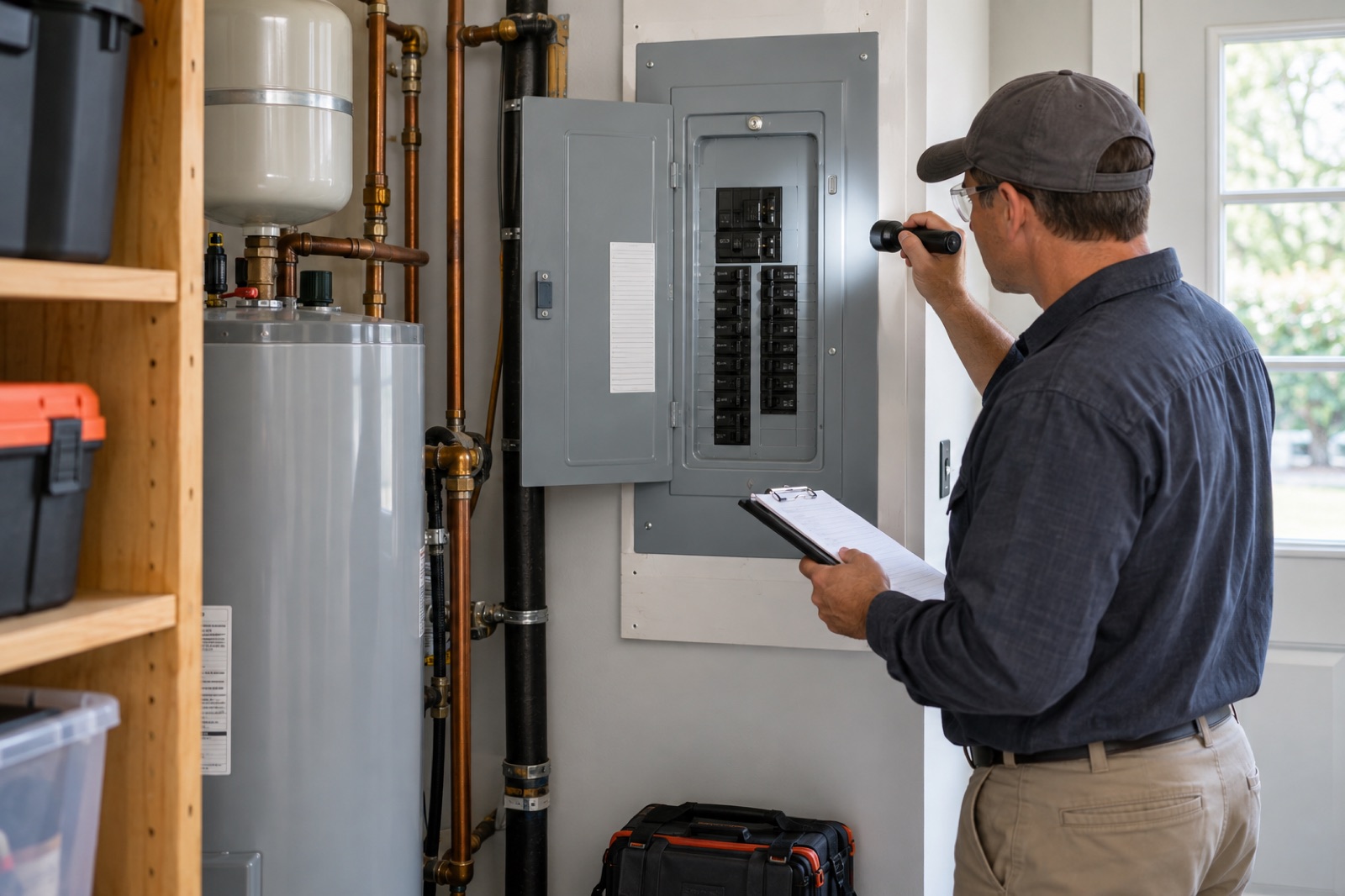
Change locks or codes, locate water and gas shutoffs, identify the electrical main, test smoke and carbon-monoxide alarms, replace filters, and learn emergency exits.
Keep contractor, utility, association, and warranty contacts together.
03 / FIELD GUIDE
Prioritize the inspection report
Convert observations into urgent, 90-day, one-year, and monitor categories. Get specialist advice for safety, water, structure, electrical, and major system concerns.
Do not remodel over unresolved moisture or structural problems.
04 / FIELD GUIDE
Create the ownership system
Store closing documents, surveys, permits, invoices, manuals, photos, paint colors, warranties, and maintenance dates. Automate monthly reserve transfers.
The first 90 days should increase knowledge and resilience, not exhaust cash on visible upgrades.
DECISION NOTEBOOK
Keep the evidence, assumptions, and next action together
Create one working file for moving and the first 90 days. Record the date, source, property or loan assumptions, the person responsible for confirming each fact, and the deadline attached to it. A number without its assumptions is difficult to compare later, especially when rates, insurance, taxes, credits, property condition, or contract terms change.
Save the supporting document or authoritative link, not only a screenshot or verbal summary.
Run a reasonable base case and a less favorable case. Make the decision work across a range.
Write the trigger, owner, and date for the next action so the plan does not drift.
When a professional gives an answer, ask what could make it change. That question exposes missing documents, property-specific limits, jurisdiction differences, and timing assumptions. It also creates a better handoff among lender, inspector, agent, attorney, tax professional, insurer, and settlement team when several disciplines touch the same decision.
VISUAL MODEL
Put the moving parts on one page
| Decision area | What to verify | What to avoid |
|---|---|---|
| Money | Current written estimates and reserves | Using a maximum as a comfort target |
| Property | Condition, documents, hazards, and fit | Relying on listing language alone |
| Contract | Rights, duties, dates, and exit paths | Waiving protection without a quantified plan |
WATCH FOR
Local law, loan rules, property facts, and contract language control the real transaction. Use this guide to ask better questions, then verify the answer for your situation.
PRIMARY SOURCES
Sources and further reading
- Consumer Financial Protection Bureau, what to expect at closing ↗
- Consumer Financial Protection Bureau, Owning a Home ↗
Facts and links last checked September 19, 2026. Statistics describe the cited publication period and are not forecasts.
NEXT CHAPTER
Maintenance and equity
Protect the building, budget for irregular work, and understand what actually changes your ownership stake.
Continue reading →